Upcoming
Care@Home (“AI that Cares for Aging at Home”) is a new three-year European project starting April 2026. The ultimate goal of the research is to develop an advanced AI-powered contactless monitoring ecosystems that enhances independent living by improving quality of life for older adults, reducing caregiver workload, supporting telecare delivery, enabling timely interventions, and offering peace of mind to families. The Swedish part of the project is funded by Forte, the Swedish Research Council for Health, Working Life & Welfare, as part of the European Transforming Health and Care Systems (THCS) partnership’s 3rd transnational call “Better care closer to home: Enhancing primary and community care”.

Ongoing projects
“Child development in the Age of AI & Social Robots” is a new collaboration funded by WASP-HS 2025-2030 (coordinator: Ginevra Castellano/Uppsala; collaborators: Helena Lindgren/Umeå, Olov Engwall/KTH, Valentina Fantasia/Lund) addressing developmental challenges for children in the AI era, both in terms of how children interact with AI agents and social robots, and of how this process is shaped by, and shapes, fast-changing socio-cultural factors and practices. More specifically, we want to (1) understand individual and social consequences of children’s interaction with AI systems, and (2) explore new opportunities to promote development of children’s AI literacy, social, cognitive and emotional skills, wellbeing, and values that better meet the needs of the future society.
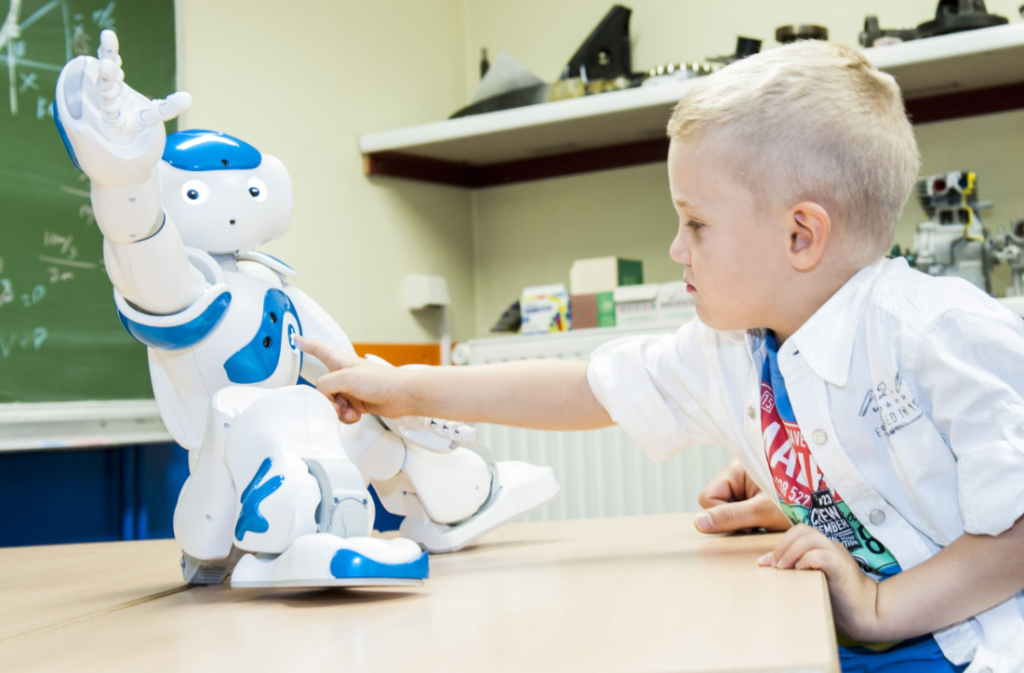
“Social Cognition in Human-Robot Interaction” is my current basic research grant funded by the Swedish Research Council (VR) 2023-2026. What Sam Thellman, Franziska Babel, Hilda Nääs and I are addressing in this project is this: Our recent systematic review of 155 empirical studies (Thellman et al., 2022) has shown that the attribution of human-like mental states to robots is a common phenomenon. However, little is known about the cognitive mechanisms underlying such attributions. The hypothesis underlying this project is that there are mainly three interacting mechanisms at play: projection (i.e., using one’s own knowledge as a starting point or anchor), stereotyping (i.e., using knowledge about groups/categories of others), and the influence of interactive experience from encounters with specific robots. The project empirically investigates the use of these mechanisms, using a range of different types of robots, and develops an integrated theoretical account of their interaction in human understanding and prediction of robot behavior.
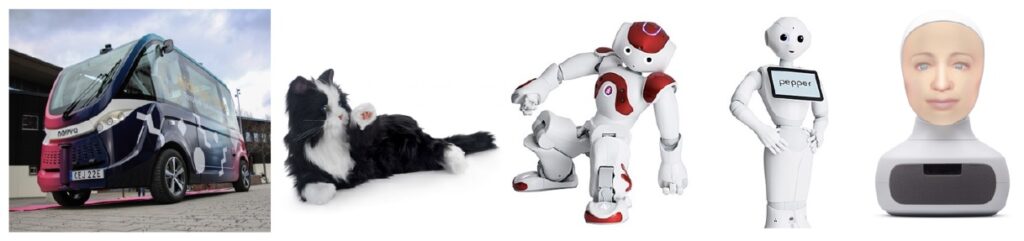
Some of the robots we use to study the cognitive mechanisms underlying human interpretation of robot behavior
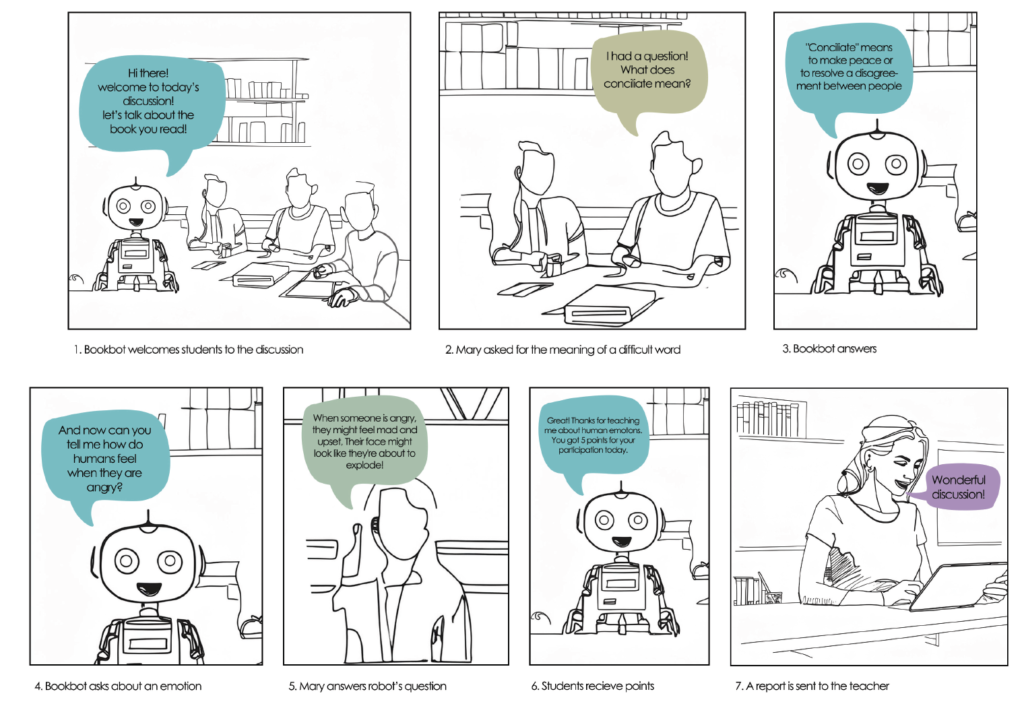
“How hot is the Bookbot? Designing for emotion and motivation in reading with a social robot in school” is another project (2023-2025) funded by VR 2023, the Swedish Research Council (PI: Mattias Arvola). In collaboration with education researchers and schools in Norrköping, we tackle the problem that the motivation to read literature has declined for many years among school children in Sweden (and many other countries). This is a participatory co-design research project with teachers and children to systematically explore and evaluate the design and use of social robots in reading activities, with the aim to assist teachers in supporting 10–11-year-olds’ emotional and motivational experiences of reading.
Bookbot scenario (illustration: Arezou Mortazavi)
The project “Lust att läsa” (“Motivation to read”) is funded by Norrköpingsfonden 2023-2025 (PI: Susanne Severinsson) and strongly overlaps with the Bookbot project above, with a focus on the educational perspective.
Earlier Projects
This list is still incomplete & under construction …
The project “Human Interaction with Intelligent Systems-of-Systems” (PI: Mattias Arvola), carried out in collaboration with RISE SICS East, was funded by SSF 2019-2023, and resulted in Oscar Bjurling’s 2025 PhD thesis “Designing Human-Swarm Interaction Systems” on the design of human operators’ interactions with autonomous systems-of-systems, in particular drone swarms.
2022-2023 I was PI for “Human Interaction with Autonomous Minibuses”, a postdoc project (Sam Thellman‘s) funded by ELLIIT and carried out in collaboration with VTI, the Swedish National Road & Transport Research Institute, in which we studied people’s interaction with the autonomous shuttle buses we have on the Linköping University Campus Valla.
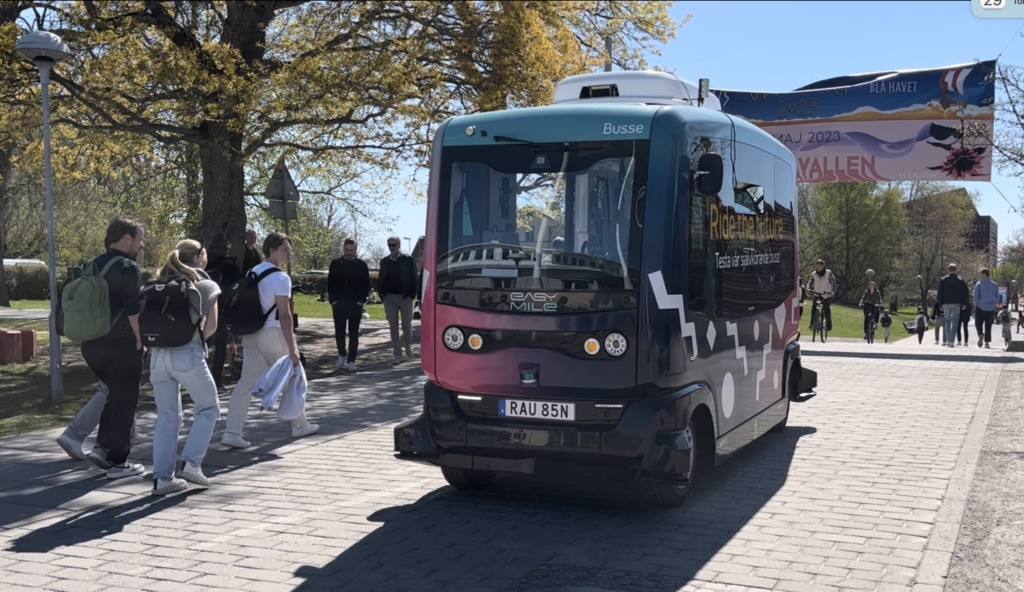
“Busse”, one of the autonomous shuttle buses on LiU’s Campus Valla
2019-2021 I was the Linköping PI for the European-Commission funded Horizon 2020 project SmartWork: Smart age-friendly working and living environment – A worker-centric AI system, which addressed a key challenge facing today’s older generation, as they are living and working longer than earlier generations, namely the design and realization of age-friendly living and working spaces.
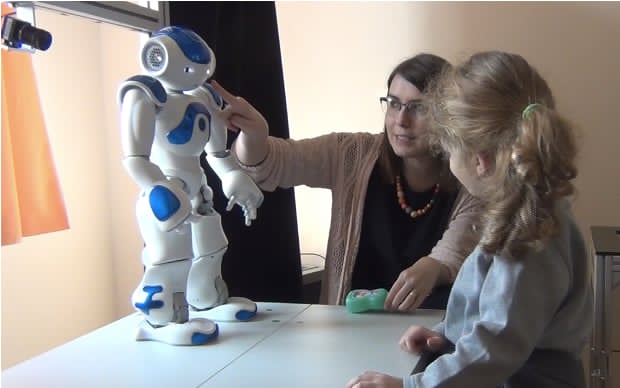
2014-2019 I coordinated the European-Commission funded FP7 project DREAM (Development of Robot-Enhanced Therapy for Children with Autism Spectrum Disorders), which investigated the use of social robots in psychotherapy for kids with autism. This was a collaboration of clinical psychologists, cognitive scientists, social robotics and computer vision researchers. Project outputs include papers in IEEE Robotics & Automation Magazine (general overview, 2019), PLoS One (public dataset, 2020), and most recently Science Robotics (results from clinical trials, 2025).
DREAM project 2014-2019